

Life is full of moments that challenge our courage, test our resilience, and push us to step outside our comfort zones. One of the most profound experiences we encounter is taking a leap of faith. Whether it’s leaving a secure job to chase a dream, moving to a new city, or trusting in something unseen, the emotional and mental landscape of a leap of faith is complex, exhilarating, and sometimes terrifying.
In this article, we’ll explore what it truly means to take a leap of faith, why it’s essential for personal growth, and how you can navigate the fear and hope that come with stepping into the unknown. Along the way, we’ll weave in real-life examples, spiritual insights, and practical strategies to help you embrace uncertainty and transform your life.
Understanding How a Leap of Faith Might Feel
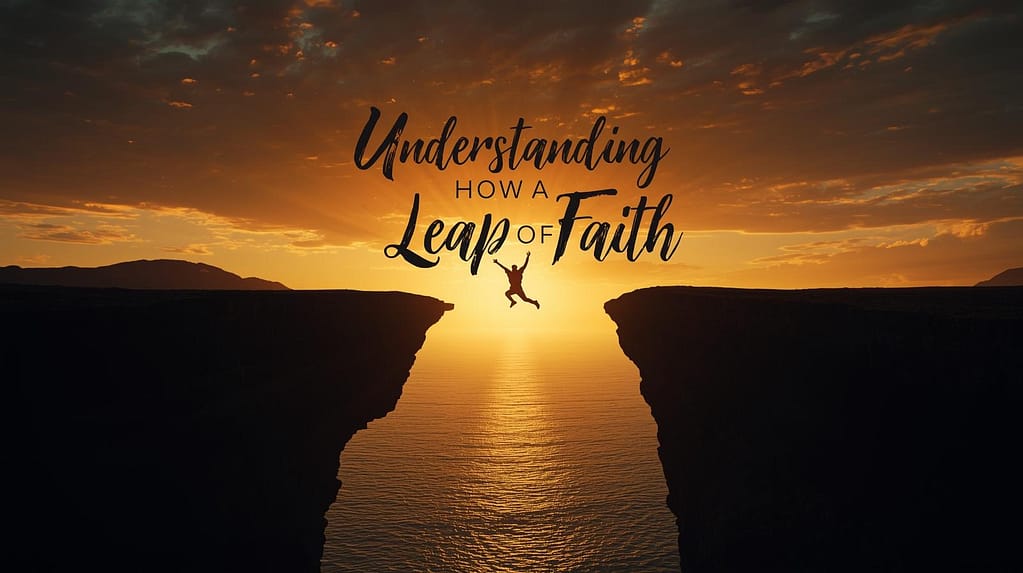
A leap of faith is more than just a decision; it’s an emotional journey. At its core, a leap of faith involves stepping into uncertainty, trusting yourself, and confronting the vulnerability that comes with letting go of control. People often describe it as a mix of fear and hope, a delicate balance between the risk of failure and the possibility of transformation.
When I first moved abroad for my studies, I remember the turbulence of emotions vividly. The night before my flight, I felt a combination of exhilaration and terror. I was leaving the familiar—my family, my hometown, the safety of routine—for a world unknown. That internal conflict, that mixture of excitement and anxiety, is exactly what a leap of faith feels like. It’s a personal growth experience that tests your courage, resilience, and adaptability.
Taking a leap of faith isn’t simply throwing caution to the wind. It’s about recognizing fear yet choosing to move forward, embracing the vulnerability that accompanies personal growth, and trusting that the journey itself offers profound lessons. Our minds interpret this experience as a balance of uncertainty and potential, where every step carries both risk and the chance to uncover deeper self-awareness.
Taking a Leap of Faith Meaning and Its Importance
So, what does taking a leap of faith truly mean? At its heart, it is a conscious choice to move beyond your comfort zone, to embrace uncertainty, and to pursue growth even when the outcome is unknown. It’s about stepping into the unknown with courage, knowing that fear is natural, but not allowing it to control your life decisions.
Why is it important? Because personal transformation often lies on the other side of fear. Every exhilarating yet terrifying leap you take provides a chance to develop resilience, adaptability, and self-discovery. From a career pivot to a major life decision like moving to a new city, taking a leap of faith can open doors to opportunities that would otherwise remain closed.
I’ve seen friends leave secure jobs to pursue entrepreneurial ventures. Initially, it felt precarious and uncertain, but with careful planning and deliberate steps, they discovered a sense of liberation and fulfillment they never expected. The process of stepping into the unknown can be dramatic and intense, but it also builds optimism and confidence, allowing you to face future challenges with courage.
A leap of faith is transformative because it forces you to confront your limitations, challenge your self-doubt, and embrace trial and error as part of the growth journey. Every time you step forward despite uncertainty, you strengthen your capacity for risk-taking, expand your perspective, and gain invaluable life lessons.
Leap of Faith Meaning in the Bible

The concept of a leap of faith isn’t just modern advice—it has deep roots in spiritual teachings. In the Bible, several figures took leaps of faith, trusting God despite the uncertainty of the outcome. Abraham leaving his homeland, Moses leading the Israelites, and Peter stepping out of the boat onto the water are all examples of faith in action.
These biblical narratives illustrate that a leap of faith involves trusting beyond what you can see, embracing vulnerability, and relying on divine guidance. For example, Peter walking on water required him to overcome fear and focus on hope, demonstrating the essence of a leap of faith: action guided by belief rather than certainty.
Scripture consistently frames a leap of faith as a transformative act. The lessons from these stories are clear: growth and spiritual strength emerge when we step into uncertainty with courage, even when the path ahead seems turbulent or unfamiliar. Whether it’s following a calling, making a difficult decision, or trusting in God’s timing, these examples teach that faith, risk, and personal transformation are inseparably linked.
Real-Life Leap of Faith Examples

Taking a leap of faith isn’t just theoretical—it happens every day in real life. Some of the most transformative leaps involve career changes, relocation, education, or major personal decisions. These moments are often exhilarating, terrifying, and liberating all at once.
For instance, I remember a friend who left a high-paying corporate job to start a nonprofit focused on environmental conservation. The financial uncertainty and social risk were enormous, but her personal transformation was even greater. She discovered a deep sense of purpose, resilience, and courage that no conventional path could have offered.
Other common examples include:
- Moving to a new city or country: Leaving the familiar behind and trusting that you’ll adapt.
- Studying abroad: Embracing academic and cultural challenges as opportunities for growth.
- Career pivots: Leaving a secure position to pursue passion or entrepreneurship.
These real-life leaps show that stepping into uncertainty is where personal growth, adaptability, and self-discovery flourish. Every leap, whether big or small, reinforces the trial and error mindset that strengthens courage and resilience.
Take a Leap of Faith Quotes to Inspire Courage
Sometimes, the right words can give us the push we need to step into the unknown. Quotes about taking a leap of faith capture the mix of fear, hope, and growth that comes with bold decisions. One asks if we will move forward or let life slip by with regrets. Another reminds us that courage and curiosity open doors fear keeps closed. Sahil Bloom’s 100-foot gap metaphor shows that even when the leap feels daunting, real transformation happens when we trust the process.
Stories from movies and books, like Take a Leap of Faith or Spider-Man, also highlight that courage grows through action, not comfort. Stepping into uncertainty is where true growth begins.
The Psychological Side: Fear, Hope, and Uncertainty

A leap of faith triggers deep psychological processes. Fear and hope coexist, creating tension that forces reflection and growth. Your brain evaluates risk, weighing potential failure against the possibility of reward. This is often called information asymmetry, where we lack full knowledge but must decide anyway.
Understanding this can help you address fear effectively:
- Fear is natural: Acknowledge it without letting it paralyze you.
- Hope drives action: Visualizing positive outcomes boosts courage.
- Uncertainty is inevitable: Embracing it allows personal growth and self-realization.
For example, when I first considered leaving my hometown for study abroad, my mind oscillated between exhilaration and dread. By mentally rehearsing possible scenarios, gathering information, and imagining the potential rewards, I was able to bridge the 100 foot gap—that space between fear and informed action.
Psychologically, the leap of faith is not a blind jump but a calculated risk, informed by intuition, reflection, and preparation. Each experience strengthens resilience, adaptability, and self-confidence, allowing you to face future uncertainties with optimism and courage.
Steps to Take a Leap of Faith Successfully

While leaps of faith involve risk, there are practical strategies to make the process manageable and deliberate:
- Gather information: Understand your options and potential outcomes.
- Create evidence: Test small steps or pilot projects to reduce uncertainty.
- Address fear: Identify limiting beliefs and confront them with rational thinking.
- Mental preparation: Visualize success and mentally rehearse challenges.
- Embrace calculated risk: Recognize the difference between reckless leaps and informed decisions.
Following these steps can turn a daunting leap into a structured, empowering experience, ensuring that fear becomes a motivator rather than a barrier. This approach combines decision-making strategies, emotional growth, and personal development, reinforcing confidence and optimism.
The 100 Foot Gap Metaphor Explained
Sahil Bloom’s 100 foot gap metaphor is a perfect lens for understanding how a leap of faith feels. Imagine standing at the edge of a cliff, staring across a gap that seems too wide to cross. Your instincts scream caution, yet you know the only way forward is to jump. This is more than physical—it is emotional and mental. The gap embodies uncertainty and possibility, where your mind wrestles with fear and hope, and every step requires courage.
In real life, this gap might appear as a career pivot, moving abroad, or starting a new venture. I remember the first time I left a secure corporate job to pursue an entrepreneurial dream. The financial and social risk felt extreme, and the unknown was daunting. Every fear—failure, judgment, instability—was real. But by mentally preparing, gathering evidence, and accepting the vulnerability inherent in risk-taking, I was able to bridge the gap. That leap became a profound personal transformation, teaching resilience, adaptability, and optimism.
A few guiding principles make bridging your own 100-foot gap manageable:
- “Feel the fear, but let it drive you forward, turning hesitation into courage.”
- Focus on calculated risk and what you can influence.
- Use decision-making strategies and evidence to reduce uncertainty.
This metaphor illustrates the core of a leap of faith: the emotional journey is as transformative as the outcome, shaping self-realization and the courage to face future uncertainties.
Leap of Faith in Movies and Popular Culture

Media often dramatizes leaps of faith, showing how courage emerges in moments of intense vulnerability. For example, in Spider-Man, when Peter Parker steps off the ledge, trusting his web, it is more than a stunt—it symbolizes stepping into the unknown, trusting oneself, and embracing fear. Similarly, in Inception, characters dive into surreal dreamscapes without certainty, highlighting information asymmetry and the mental challenge of making decisions amidst uncertainty.
Movies like Take a Leap of Faith or iconic moments in Spider-Man teach that fear is natural, but personal growth and transformation require action. These narratives reflect real-life experiences:
- Courage emerges when you confront fear and hope simultaneously.
- Risk-taking catalyzes self-discovery and resilience.
- Vulnerability is not weakness—it’s the path to personal transformation.
Everyday Activities That Require a Leap of Faith
Leaps of faith aren’t always about major life decisions; many occur in everyday actions, subtly shaping who we become. I recall my first public speaking session. Anxiety and self-doubt were overwhelming, yet stepping on stage taught me lessons in confidence, presence, and adaptability that no preparation could.
Other everyday leaps might include:
- Trying a new hobby, learning a skill, or volunteering for something unfamiliar.
- Taking on new responsibilities at work or pursuing a career pivot.
- Moving to a different city, embracing cultural and personal challenges.
Even small, deliberate acts of courage cultivate resilience, optimism, and personal growth. Over time, these “minor leaps” build the mental and emotional foundation for bigger, transformative decisions, proving that stepping into the unknown isn’t only for extraordinary circumstances—it’s a part of life itself.
Lessons Learned from Taking Risks

Reflecting on the leaps I’ve taken, the most powerful lesson is that every risk—large or small—carries insight. Moving abroad for study taught me how to navigate cultural differences and adapt quickly. Leaving a secure job showed me that failure is never final—it is feedback guiding personal development and decision-making strategies.
Some of the most important insights include:
- Embracing uncertainty builds courage and self-trust.
- Resilience develops through trial and error, not comfort.
- Optimism and hope become practical tools for navigating fear.
- Self-realization and personal growth occur when you act despite vulnerability.
Each leap strengthens adaptability, imagination, and confidence, showing that risk-taking is a cornerstone of transformation. It’s not merely a physical action—it’s a mental, emotional, and spiritual journey that fosters life change, self-discovery, and the courage to act.
Embracing Change and Moving Forward
Taking a leap of faith often forces us to confront one of life’s most uncomfortable truths: change is inevitable. Whether it’s a career shift, a move to a new city, or a personal transformation, the unknown can feel chaotic, turbulent, and even frightening. Yet, it is precisely in this space of uncertainty that growth flourishes. By embracing change, we cultivate resilience, adaptability, and optimism, learning to navigate life with confidence rather than fear.
I remember the first months after I moved abroad. Everything felt unfamiliar—strange streets, new systems, and a social network that didn’t yet exist. Each day was an exercise in stepping into the unknown, facing vulnerability, and building trust in my own abilities. Slowly, I realized that these challenges weren’t obstacles—they were catalysts for personal transformation. Every small success, every minor setback, strengthened my courage and broadened my perspective. In hindsight, embracing change wasn’t just necessary; it was exhilarating, liberating, and life-altering.
The journey of a leap of faith reminds us that life change is rarely linear. There will be setbacks, doubts, and moments of fear. But by focusing on what can be controlled—our mindset, preparation, and actions—we build a foundation of confidence that enables us to face even the most dramatic shifts with grace and optimism.
Leap of Faith Sermons and Spiritual Guidance

Spiritual teachings have long emphasized the power of a leap of faith. Sermons, scriptures, and spiritual leaders often highlight that trusting the unseen is not only courageous but transformative. In the Bible, figures like Abraham, Moses, and Peter exemplify this principle. Each of their leaps required vulnerability, courage, and hope, showing that growth often emerges from acts of faith rather than certainty.
I recall a sermon that framed a leap of faith as a bridge between fear and divine purpose. The speaker emphasized that when we step forward with trust—despite uncertainty—we open ourselves to experiences that surpass what we can imagine. This aligns closely with the concept of stepping into the unknown: embracing life fully while trusting that even turbulence and chaos serve a greater purpose.
Spiritual guidance reinforces the idea that leaps of faith are not reckless; they are deliberate acts of courage rooted in optimism, resilience, and hope. They encourage us to embrace vulnerability, confront fear, and take calculated risks that align with personal and spiritual growth.
The Transformative Power of a Leap of Faith
Ultimately, a leap of faith transforms us in three profound ways: emotionally, mentally, and spiritually. Emotionally, it cultivates courage and optimism, teaching us to navigate fear without being paralyzed by it. Mentally, it strengthens resilience, adaptability, and decision-making, preparing us for future uncertainties. Spiritually, it deepens trust—in ourselves, in life, and in forces beyond our immediate understanding.
I’ve experienced this firsthand. Every leap—whether it was moving abroad, leaving a job, or pursuing a dream—expanded my capacity for personal growth and self-realization. Even failures became lessons in optimism, courage, and trial and error. The act of stepping forward, despite fear and uncertainty, proved more powerful than any outcome.
A leap of faith reminds us that life’s most significant transformations often happen beyond the edge of comfort, in the space where fear, hope, and possibility intersect. It is a journey of vulnerability, courage, and growth—a reminder that every risk taken with intention has the potential to reshape our lives, expand our horizons, and reveal strengths we never knew existed.
Integrating Lessons Into Everyday Life

By now, it’s clear that a leap of faith is more than a single decision—it is a mindset, a continuous practice of embracing uncertainty and moving forward despite fear. Every moment in which we step outside our comfort zone, whether large or small, is an opportunity for personal growth, resilience, and self-realization.
Think about the ordinary choices we make daily: approaching a challenging conversation, taking on a new project, or even pursuing a passion that feels risky. Each of these small leaps reinforces the courage to act, teaches adaptability, and slowly reshapes how we perceive possibilities. The cumulative effect of these experiences builds the kind of inner strength that makes dramatic life changes—like moving abroad or changing careers—feel less paralyzing.
In my own life, I’ve found that embracing these everyday leaps creates a feedback loop of growth: confidence grows with experience, and experience grows with deliberate action. The key is to remain conscious of fear and hope, trusting your instincts while preparing thoughtfully, and recognizing that every attempt—successful or not—is a step toward transformation.
Spiritual and Emotional Insights
A leap of faith is inherently tied to spiritual and emotional wisdom. Across cultures and religions, taking the unknown step is seen as an act of courage, trust, and surrender. In the Bible, figures like Abraham, Moses, and Peter exemplify the profound impact of trusting in a higher purpose, even when the path ahead is unclear. Their actions remind us that spiritual growth often begins where certainty ends.
On a personal, emotional level, taking leaps cultivates vulnerability, self-awareness, and empathy. When we step into uncertainty, we confront our limitations, fears, and doubts. This confrontation is uncomfortable, yet transformative. Over time, it builds a profound sense of emotional resilience, allowing us to approach relationships, challenges, and opportunities with greater confidence and compassion.
Practical Guidance for Your Own Leap

While every leap is unique, some practical approaches can help make the experience less intimidating:
- Begin with baby steps: A leap of faith doesn’t always have to be bold. Take small, manageable actions that gently stretch your comfort zone.
- Reflect on past successes: Remind yourself of moments when risk-taking led to growth or unexpected rewards.
- Focus on controllable factors: Preparation, mindset, and skill-building reduce unnecessary fear.
- Visualize possibilities: Imagine the positive outcomes to cultivate hope alongside courage.
These strategies are not a formula—they are tools that honor the uncertainty and possibility inherent in every leap of faith. They allow the act to remain both daring and deliberate, balancing fear and hope with calculated action.
The Lasting Impact
Taking a leap of faith is transformative because it touches every dimension of life—mental, emotional, spiritual, and practical. It reshapes how we view ourselves, our potential, and the world around us. Each leap strengthens our resilience, courage, and adaptability, and gradually expands the space of what we believe is possible.
In reflecting on my own experiences, I see that the true power of a leap of faith isn’t measured by outcomes alone. It’s measured by how the act changes us internally—how it teaches us to trust ourselves, embrace vulnerability, and navigate uncertainty with optimism and imagination. Every leap leaves a trace of growth, a mark of transformation, and an invitation to take the next one.
Final Thought: The Transformative Journey
A leap of faith is never just about the destination; it is about the journey—an emotional, spiritual, and psychological evolution that unfolds as we act despite fear, uncertainty, and doubt. From small daily acts to life-altering decisions, each leap builds a reservoir of courage, resilience, and wisdom.
When you consider your next step—whether personal, professional, or spiritual—remember that growth lies on the other side of fear. Trust in your abilities, embrace uncertainty, and take action. The leap is simultaneously terrifying, exhilarating, and liberating—but above all, it is transformative.
The lasting lesson is simple yet profound: life rewards those who dare, teaches those who try, and changes those who step forward. Every leap of faith is an invitation to discover the strength, courage, and potential within yourself that you never knew existed.
What happens when you take a leap of faith?
When you take a leap of faith, you move forward despite fear and uncertainty. This act often leads to personal growth, new opportunities, and self-discovery. Emotionally, it challenges you to confront vulnerability, while mentally, it builds resilience and courage. Taking that step opens the door to experiences and lessons that wouldn’t be possible if you stayed in your comfort zone.
How to take a leap of faith in life?
Taking a leap of faith begins with acknowledging your fears but not letting them control you. It involves preparing yourself mentally and emotionally, gathering information where possible, and then committing to action despite uncertainty. The key is to focus on potential growth, embrace vulnerability, and trust the process rather than obsessing over the outcome.
What are the benefits of a leap of faith?
The benefits of taking a leap of faith include personal growth, increased confidence, and resilience from facing fear. It opens up new opportunities that would not exist without risk and fosters self-discovery, helping you understand your true values, goals, and potential. Additionally, it encourages transformation, reshaping your mindset and approach to challenges in life.
What is an example of a leap of faith?
An example of a leap of faith is leaving a secure job to pursue a passion, starting a new business, or moving to a new city or country. It could also be entering a new relationship, following a dream despite uncertainty, or trusting in a higher purpose. All of these actions require stepping forward even when the outcome is unknown.
What does a leap of faith look like?
A leap of faith looks like taking decisive action despite uncertainty and fear. It could be a significant life change, such as relocating, starting a career, or following a dream, or a smaller but meaningful step, like trusting your instincts, embracing vulnerability, or making a bold decision that challenges your comfort zone. It is always characterized by courage, trust, and the willingness to move forward without guarantees.
What is a real-life example of faith?
A real-life example of faith can be seen in both historical and modern contexts. In the Bible, Abraham left his homeland without knowing where he was going, trusting God’s guidance. In today’s world, it could be someone pursuing a dream career, starting a business, or moving to a new country despite the risks, believing in themselves and the possibilities ahead. Faith is essentially taking action while trusting in an outcome you cannot fully control.