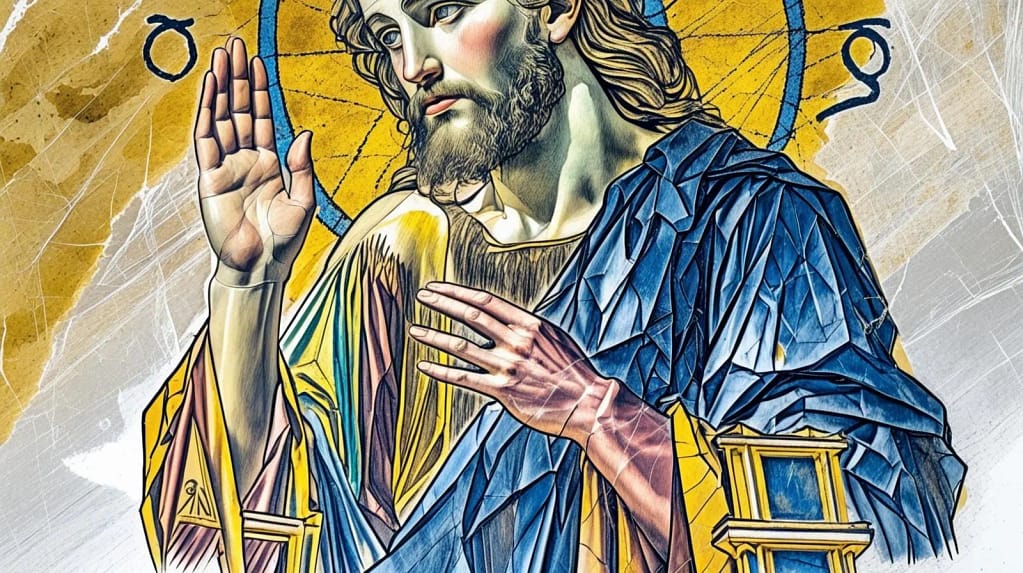
If you’ve ever looked at an ancient icon of Christ or a saint, you’ve likely noticed the distinctive, carefully arranged fingers of His right hand. This is the classic gesture that signifies blessing in Christian art. For centuries, this icon hand gesture has been a cornerstone of Christian symbolism. But is our modern understanding of this sacred sign complete? The true story behind the gesture that signifies blessing reveals a fascinating blend of deep faith and ancient Hellenistic culture, challenging what we think we know.
The Mystery in Plain Sight: Decoding the Iconic Hand Gesture
Across thousands of Byzantine icons, this specific right hand gesture appears constantly. The common interpretation is that it represents a divine benediction. However, this gesture that signifies blessing appears in surprising contexts. In the Monreale mosaic, Christ directs this same gesture toward Satan, complicating a simple interpretation of blessing.
More Than a Blessing? The Surprising Historical Origin
To decode this puzzle, we must look to the Late Antique era. Early Christian iconography meaning was a creative reworking of classical traditions. This gesture that signifies blessing did not originate in churches but in the forums of the ancient world. Its presence in secular texts and early Christian works like the Rabula Gospels points to a meaning rooted in ancient rhetoric.
From Ancient Orators to Divine Preachers: The True Meaning Revealed

The definitive key comes from Roman rhetorician Marcus Fabius Quintilianus. He describes an oratorical gesture perfectly matching the hand position in icons. This was not a Stavros blessing but a preaching gesture. Writer Paulus Silentiarius confirms this, describing Christ “stretching the fingers of his right hand, as he proclaims the ever-living word.” Thus, the Jesus Christ gesture represents divine proclamation.
A Gesture of Dispute: The Old Believers and the Change in Tradition
The interpretation shifted dramatically during the Old Believer dispute in the 17th century. A fierce debate erupted over the correct form of the two-finger blessing versus the newer Stavros blessing. This controversy solidified the gesture’s identity primarily as a ritual blessing, causing its original meaning as an oratorical gesture to fade from popular understanding.
How to Recognize the Gesture of Blessing and Preaching Today
Now you can appreciate this symbol’s layers of meaning. When you see it in the Hagia Sophia mosaic or any ancient icon, recognize it as both a sacred gesture that signifies blessing and a powerful teaching symbol. This deeper understanding reveals a faith that values both conferring grace and proclaiming eternal truth through the eloquent language of icon hand gesture and sacred fingers meaning.