
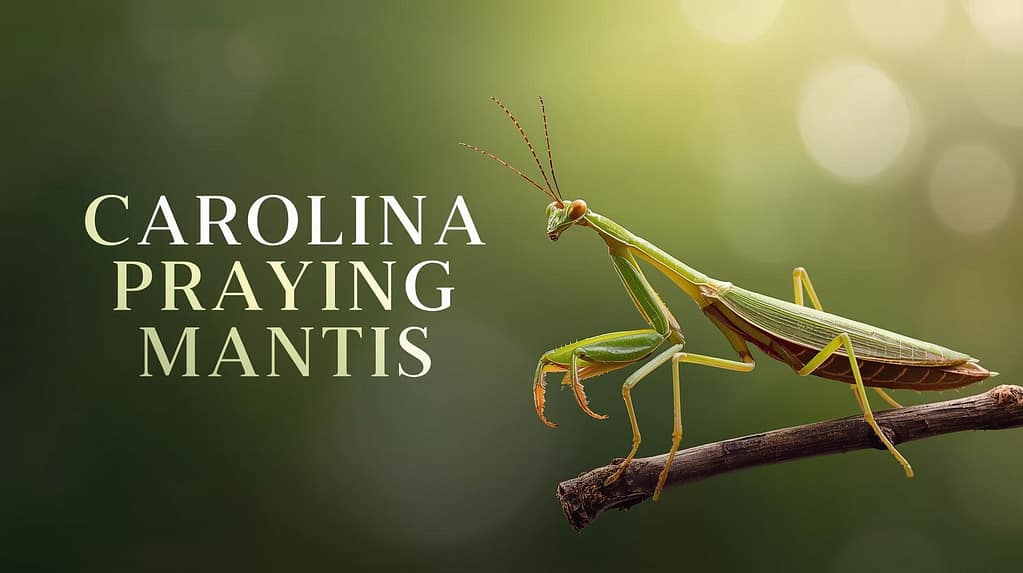
If you’ve ever wandered through a garden or backyard in the southeastern United States, you may have seen a Carolina praying mantis perched on a branch, perfectly still, looking like a tiny green or brown sculpture. These fascinating insects, scientifically known as Stagmomantis carolina, are native to the Americas and have captivated the attention of entomologists, gardeners, and curious kids alike. Watching one in action can feel like peeking into a miniature jungle drama—full of hunting, camouflage, and surprising interactions.
What is the Carolina Praying Mantis?
The Carolina praying mantis is one of the most common native mantids in the United States, ranging from South Carolina—its state insect—down to Brazil. Unlike the larger Chinese mantis (Tenodera sinensis) or the European mantis (Mantis religiosa), the Carolina mantis is smaller but no less impressive. Adults typically reach 47–60 mm for females and around 54 mm for males. Their bodies can shift in color from dusty brown to gray or even green, allowing them to blend seamlessly into leaves, branches, or garden plants.
Walking through a garden in Georgia one afternoon, I saw a female Carolina mantis positioned on a rose bush. It adjusted its color almost perfectly to match the stems, so that I almost missed it entirely. As I crouched closer, I watched it raise its raptorial front legs, ready to snatch any passing insect. This is a perfect example of their ambush predator nature, making them excellent hunters in their natural habitat.
Native Mantis Species in the Americas
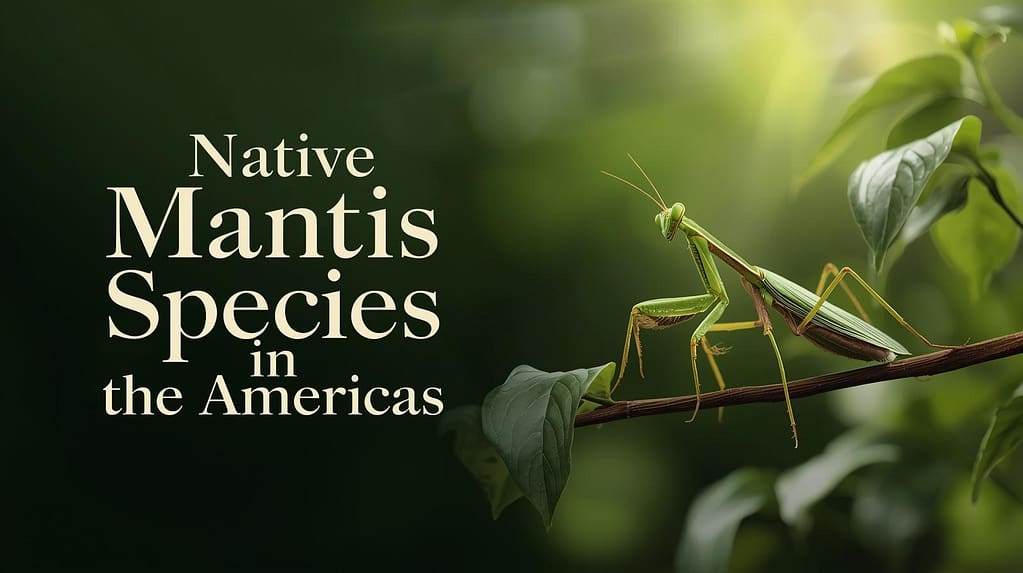
The Carolina mantis is part of a broader group of native mantids, distinguished by their rectangular face plate and absence of leg spots, which differentiates them from European mantids. Unlike non-native species like the Chinese mantis, Carolina mantises have adapted to local ecosystems over centuries. They are found on tree trunks, rocks, shrubs, and even buildings where insects are plentiful.
In my own backyard in Baldwin County, Georgia, I’ve noticed that they prefer sunny spots in the morning and shaded branches in the heat of the afternoon. They are patient hunters, often remaining motionless for hours until prey ventures too close. Observing one in the wild really emphasizes how perfectly adapted these insects are to their environment.
Carolina Mantis vs Chinese Mantis
Many people confuse the Carolina praying mantis with the Chinese mantis, especially in gardens where both species might appear. While they share the same ambush predatory behavior, there are clear differences. The Chinese mantis is larger, often exceeding 100 mm, and has a triangular head that appears sharper compared to the Carolina’s more rectangular face plate. Chinese mantids are also known for more pronounced sexual cannibalism, whereas the Carolina mantis displays it less frequently but still noticeably during mating.
The wings of a female Carolina mantis extend only about three-quarters of the abdomen, making them less capable of sustained flight compared to males or Chinese mantises. In my experience, a female Carolina mantis perched on a fence post can barely glide if startled, while a male takes off with agility, navigating quickly across the garden in search of a mate. This difference in wing length is a key visual cue when trying to identify male vs female Carolina mantis.
Comparing them to European mantids (Mantis religiosa) and narrow-winged mantids (Tenodera angustipennis) highlights more distinctions. European mantids have distinct leg spots and slightly broader bodies, while narrow-winged mantids are rarer in the U.S. but can sometimes appear in Maryland and other mid-Atlantic states.
Are Carolina Mantises Dangerous?
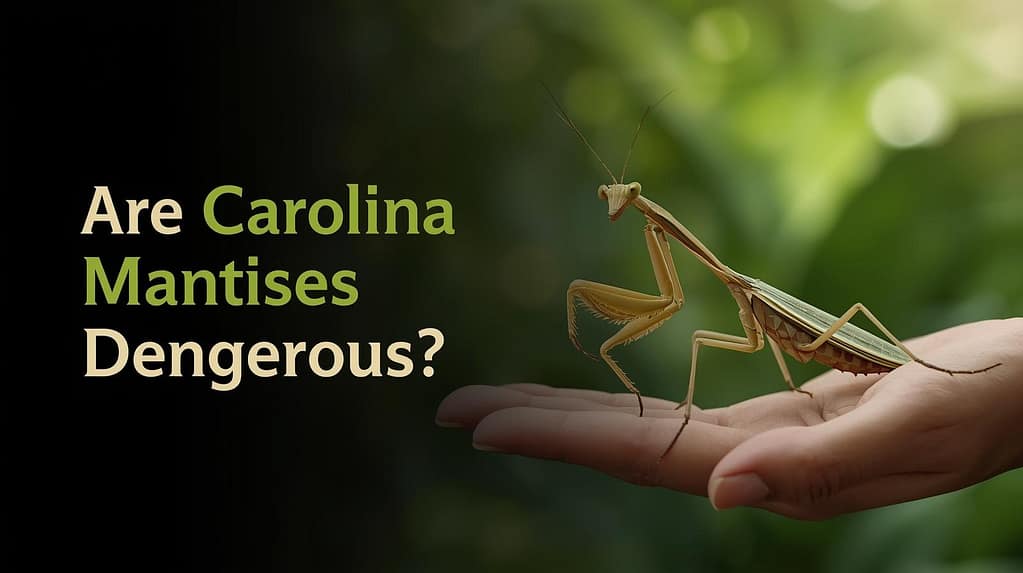
Despite their fearsome hunting abilities, Carolina mantises are not dangerous to humans or pets. They are predators of insects, not mammals. However, they do display sexual cannibalism, particularly during mating. Females occasionally eat males, which may seem gruesome but is part of their natural lifecycle. This behavior has fascinated researchers like Willis Stanley Blatchley and Daniel Otte, who have studied mantids for over a century.
I once observed a male approaching a female in my garden. He cautiously circled, trying not to trigger her predatory reflex. After a tense few minutes, he managed to mate successfully without becoming lunch. These real-life moments emphasize how their predatory instincts are finely tuned to insects and, occasionally, to other mantids—not humans.
Carolina mantises interact peacefully with most pets, though curious cats or dogs may try to paw at them. In such cases, mantises rely on camouflage and stillness rather than speed or flight to avoid danger.
Male vs Female Carolina Mantis
The differences between male and female Carolina mantis are striking once you know what to look for. Females are generally larger, with adult female Carolina mantis sizes ranging from 47–60 mm. Males are slimmer, usually around 54 mm, and have longer wings relative to their body size, allowing them to fly more effectively.
Behaviorally, males are more mobile and tend to wander in search of mates, whereas females often remain stationary, focusing on hunting. This has implications for gardeners who want to observe these insects: you’re more likely to find females quietly perched, waiting for prey, and males actively moving around in search of females.
I remember one afternoon when a male flew across a small pond in my backyard, landing perfectly on a lily pad. Moments later, a female on a nearby bush captured a Monarch butterfly caterpillar. It was a vivid demonstration of the differences in hunting and mobility between male and female Carolina mantis.
Female Carolina Mantis Characteristics
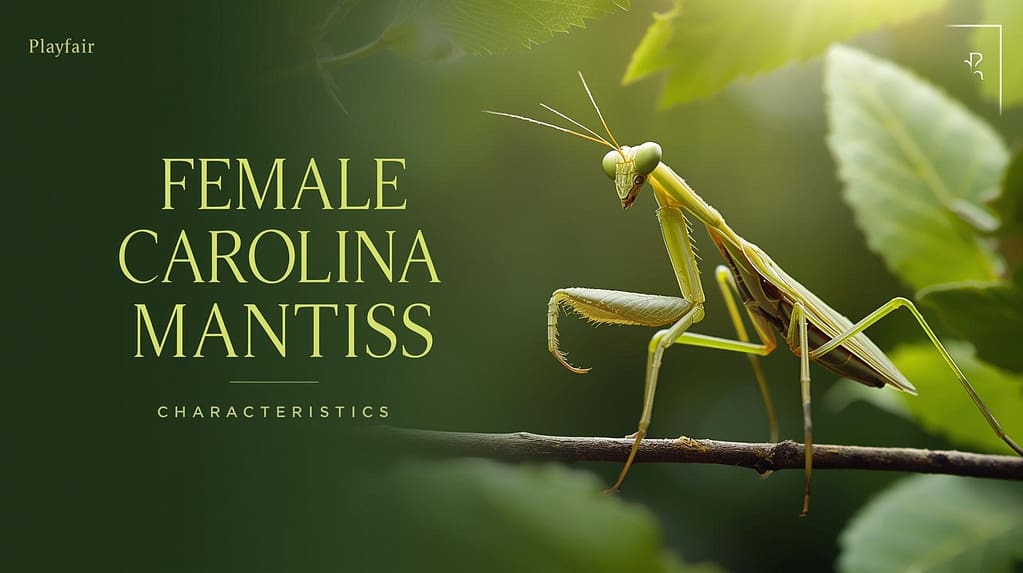
Adult females are truly a marvel. Their wings extend three-quarters of the abdomen, and their color adaptation allows them to blend into diverse environments—from brown dried leaves to green garden foliage. This camouflage is not just aesthetic; it’s crucial for both hunting and protection.
During autumn, I observed female Carolina mantises disappear almost completely among dry cornstalks, becoming nearly invisible as they waited motionless for Gypsy Moth caterpillars to move close enough. Their stillness can last for hours without a single mistake. Rather than chasing prey like many insects, Carolina mantises depend on stealth and precision, which explains why they can function as natural pest controllers, even though their impact is helpful but limited.
Carolina Mantis Life Cycle Explained
One of the most fascinating aspects of the Carolina praying mantis is its life cycle. From the moment the female lays her ootheca—a teardrop-shaped egg case—life begins for hundreds of tiny mantis nymphs. The ootheca is carefully placed on a branch, shrub, or sometimes even garden fences. Its pale, beige color and rough texture help it blend in, protecting the eggs from predators and weather.
In early spring, the eggs hatch into first instar nymphs, which are tiny, measuring only 7–12 mm. I once had the opportunity to observe a hatch in my backyard in Georgia. Hundreds of nymphs emerged, each a miniature version of the adult, but without fully developed wings. They scattered immediately, instinctively seeking cover in leaves and small twigs. Watching them reminded me of watching a miniature army preparing for survival—tiny hunters ready to navigate a vast garden world.
The nymphs undergo multiple molts as they grow. Each molt allows them to shed their exoskeleton and increase in size, gradually acquiring the coloration and wing structure of adults. By the final molt, females reach adult female Carolina mantis size of 47–60 mm, while males are around 54 mm. The entire life cycle—from egg to adult—can span several months, with timing influenced by temperature, humidity, and availability of prey.
Understanding the Carolina mantis life cycle is essential for gardeners interested in natural pest control, as releasing ootheca in early spring can help introduce native predators into their gardens.
What Do Carolina Praying Mantises Eat?
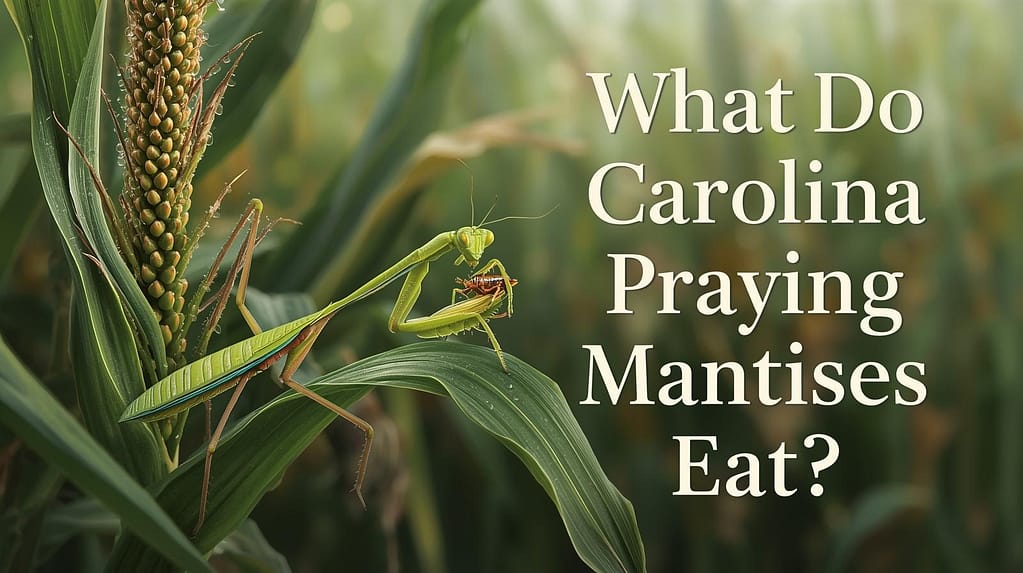
The diet of the Carolina praying mantis is diverse, consisting mainly of arthropods and other insects. They are true ambush predators, relying on stealth rather than speed. Typical prey includes:
- Caterpillars, like Gypsy Moth caterpillars
- Small flying insects, such as flies and moths
- Occasionally smaller beneficial insects, including Monarch butterflies
I remember watching a female Carolina praying mantis in my vegetable garden. She remained motionless on a tomato plant for hours. When a dragonfly, an Eastern Pond Hawk, hovered nearby, she struck with lightning speed, capturing her prey in her specialized raptorial front legs. The precision of her attack was astonishing—something you only appreciate when you observe it up close.
One interesting note: Carolina mantises are non-selective predators. While they can help reduce pest populations, they may also eat pollinators. Observing this taught me that while they are excellent hunters, their role in a garden ecosystem is more nuanced than simply being “good bugs.
Can Female Carolina Mantis Fly?
Not all mantises are equal flyers, and this is especially true for the female Carolina mantis. Compared to males, females have shorter wings relative to body size, which limits their flight ability. While males can glide across gardens to find mates, females usually rely on walking or short hops.
I once startled a female Carolina praying mantis perched on a garden gate. She flapped her wings frantically, trying to escape, but only managed a short glide before landing on a nearby fence. In contrast, a male nearby zipped across the yard effortlessly. This distinction in flight ability affects hunting, mobility, and mating behavior.
The limited flight of females makes them more visible to predators, but their camouflage skills compensate effectively. Observing this in real time highlights how evolution has balanced mobility and predatory efficiency between genders.
Carolina Mantis Range Map
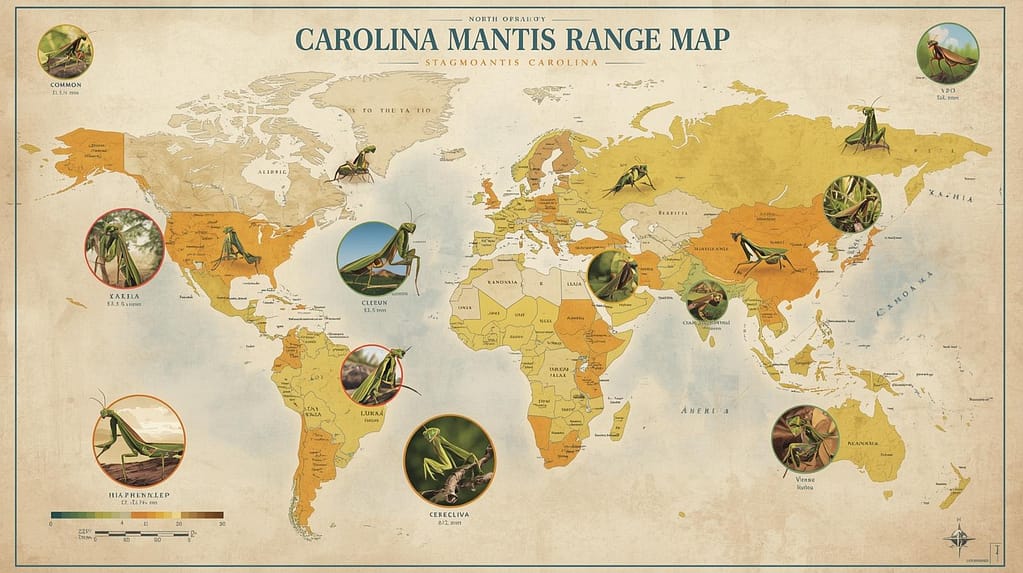
The Carolina mantis range stretches across the southeastern United States, including states like South Carolina, Georgia, and Maryland, extending south to Brazil. They thrive in a variety of habitats:
- Gardens and backyards
- Shrubs and tree trunks
- Rock formations and lightly wooded areas
Exploring a local park in North Carolina, I noticed Carolina mantises occupying both sunny garden edges and shaded underbrush. They are versatile and adaptable, but always prefer areas where insect prey is abundant. Their North Carolina praying mantis populations are particularly dense due to favorable climate and vegetation diversity.
A proper Carolina mantis range map helps gardeners and researchers understand where these native mantids are most likely to be found, assisting in conservation efforts and pest management strategies.
Carolina Mantis for Sale
Many gardeners and hobbyists seek Carolina mantis for sale as a natural method of insect control. You can find ootheca or live mantids in garden stores and online. While they are not a magic bullet for pest control, they can help reduce pest populations like aphids, caterpillars, and flies.
I purchased an ootheca from a local garden center and placed it in a flowerbed. By mid-spring, dozens of tiny nymphs emerged, demonstrating just how effective early-season introductions can be. Watching these nymphs disperse and begin hunting was an unforgettable lesson in the life cycle and predatory behavior of the species.
Using Carolina mantises in gardens can also provide educational opportunities for children. Observing the adult female Carolina mantis capture prey or seeing nymphs hatch from an ootheca gives a hands-on understanding of nature and insect life cycles.
Adult Female Carolina Mantis Size & Growth
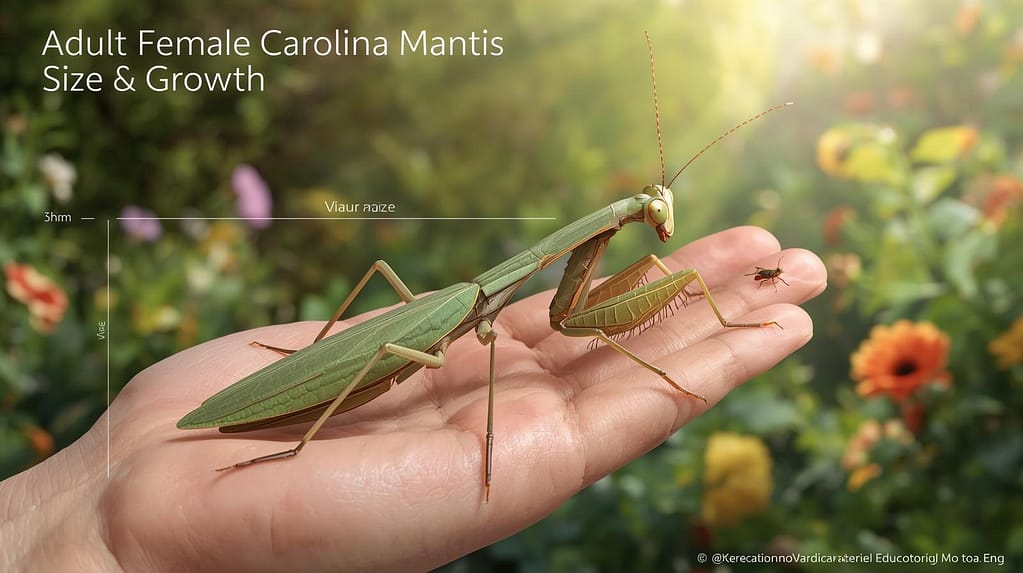
Size is an essential characteristic when identifying Carolina mantids. The adult female Carolina mantis typically measures 47–60 mm, slightly larger than males, which average around 54 mm. Wings extend only about three-quarters of the abdomen in females, which, as mentioned, limits flight but aids camouflage.
How big do Carolina mantis get? While most fall within the standard size range, environmental factors like temperature, food availability, and humidity can influence growth. I once observed a particularly robust female in a Georgia garden reaching close to 60 mm. She dominated a patch of shrubs, hunting multiple prey in a single day—a vivid demonstration of how size contributes to hunting efficiency.
Comparing male vs female Carolina mantis in the same environment underscores behavioral differences. Males are more active, searching for mates, while females focus on hunting and ootheca placement.
Male and Female Carolina Mantis Behavior
Behavioral differences between male and female Carolina mantis are notable. Males are agile fliers, often traveling across gardens to locate females. Females tend to remain stationary, relying on camouflage to ambush prey. Sexual cannibalism occurs in about 25% of encounters, usually initiated by the female, which is part of their natural reproductive strategy.
Interactions with non-native mantids, like the Chinese or European mantis, can also affect behavior. In my own backyard, I observed a female Carolina mantis confront a slightly larger Chinese mantis. Both maintained distance initially, but the native Carolina eventually asserted dominance over a branch, showcasing territorial instincts.
Observing male and female Carolina mantis behavior in the wild is a vivid way to understand predation, mating strategies, and interactions between native and non-native species.
Tips to Identify Carolina Praying Mantis
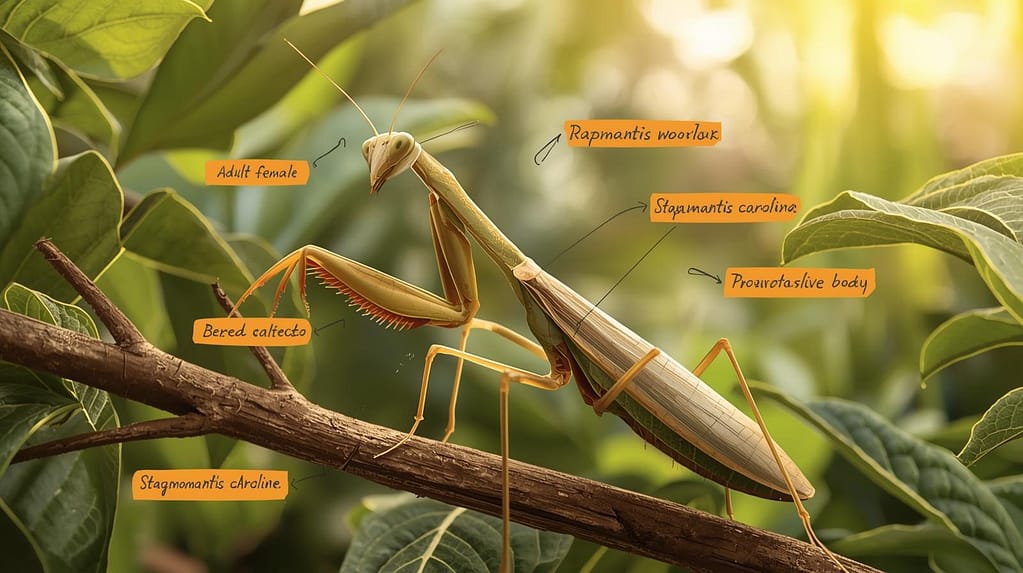
Identifying the Carolina praying mantis in the wild can be surprisingly simple once you know the key characteristics. The adult female Carolina mantis has a rectangular face plate, distinguishing her from the Chinese mantis (Tenodera sinensis), which has a more triangular head. Unlike the European mantis (Mantis religiosa), Carolina mantises have no leg spots, making them easier to spot if you know what to look for.
The wings are another clue. In females, wings extend only about three-quarters of the abdomen, whereas males have longer wings that allow better flight. This size difference is essential when comparing male vs female Carolina mantis in gardens or natural habitats.
During a spring afternoon in South Carolina, I found a small female perched on a hibiscus branch. By observing her camouflage and wing structure, I was able to identify her immediately as a Carolina mantis, rather than a non-native species that had recently appeared in the area. This hands-on observation reinforces that identification relies on multiple features: face plate shape, wing length, body size, and leg markings.
Final Thoughts
The Carolina praying mantis is a remarkable insect that blends elegance, efficiency, and adaptability. Observing them in natural settings reveals:
- Behavioral sophistication, such as ambush hunting and sexual cannibalism
- Adaptive traits, like camouflage and body color adjustment
- Life cycle marvels, from teardrop-shaped ootheca to adult hunting prowess
Understanding the differences between male and female Carolina mantis, as well as distinguishing them from Chinese, European, and narrow-winged mantids, is essential for both researchers and enthusiasts. Incorporating Carolina mantises into gardens can provide educational opportunities, pest control benefits, and a deeper appreciation for native species.
Real-life experiences, from backyard observations to garden studies, make it clear that these insects are more than just curious creatures—they are an integral part of the ecosystem, teaching patience, precision, and adaptation. Whether you are a gardener, student, or nature enthusiast, the Carolina praying mantis offers endless fascination and learning opportunities.
FAQs
Is a Carolina mantis rare?
The Carolina mantis (Stagmomantis carolina) is not rare. It is one of the most common native praying mantis species in the southeastern United States. You can often find it in gardens, fields, shrubs, wooded edges, and even on buildings. Because it blends in so well with its surroundings using natural camouflage, people sometimes think it is rare when it is actually just hard to notice. In states like South Carolina, Georgia, and North Carolina, Carolina mantises are regularly observed during spring, summer, and early fall.
What is the difference between a praying mantis and a Carolina mantis?
The term “praying mantis” is a general name used for hundreds of mantis species around the world. A Carolina mantis is one specific species within that group. The Carolina mantis is smaller than many non-native mantids, such as the Chinese mantis. It has a rectangular face plate, shorter wings in females, and no leg spots. It is also native to the Americas, while many other praying mantis species found in the U.S. were introduced from Asia or Europe.
Can you keep a Carolina mantis as a pet?
Yes, a Carolina mantis can be kept as a pet, and many people raise them for observation or education. They need a ventilated enclosure, live insects for food, and a warm environment. Carolina mantises are calm and usually tolerate gentle handling. However, they should never be kept with other mantises due to cannibalism. It is also important to check local wildlife rules before collecting one from the wild, or choose a captive-bred mantis instead.
Can Carolina praying mantis fly?
Yes, Carolina praying mantises can fly, but not all of them fly well. Male Carolina mantises are capable fliers and often use flight to search for females. Female Carolina mantises have shorter wings, which limits their ability to fly. Females usually only glide short distances or rely on walking and climbing. This difference in flight ability plays an important role in mating behavior and survival in the wild.