
Many people ask this question with honest curiosity: do Eastern Orthodox pray the rosary? I asked this question myself years ago when I first started learning about Orthodox Christianity. I had grown up seeing Catholic friends pray the rosary with beads and pictures of Mary, and when I entered an Orthodox church, everything felt similar but also very different. The prayers were deep. The silence felt alive. But there was no rosary like the one I knew.
This article is written from both learning and lived experience. I am not a priest or theologian. I am a believer who searched, asked questions, made mistakes, and slowly understood how Orthodox prayer truly works. By the end of this full article, you will clearly understand whether Orthodox Christians pray the rosary, what they use instead, and why their prayer life looks different but still deeply Christian.
Many people also ask related questions like can Orthodox Christians pray the Rosary, is the Rosary allowed in Orthodoxy, and what is the difference between the prayer rope and rosary. We will answer all of these step by step, in simple words.
Do Orthodox Pray the Rosary? Official Church View
Does the Orthodox Church Have a Rosary?
The short and honest answer is this: the Orthodox Church does not officially pray the rosary. If you visit Eastern Orthodox churches across Greece, Russia, Serbia, Romania, or Mount Athos, you will not find an official rosary devotion like in the Catholic Church.
So when people ask do orthodox pray the rosary, the correct answer from the Church is no. The Orthodox Church never developed the rosary as a formal prayer rule. It is not part of Orthodox liturgy, services, or official prayer books.
But this does not mean Orthodox Christians do not use beads or repeat prayers. Instead, they use something different, called the orthodox prayer rope, also known as the orthodox rosary prayer rope by some people online.
Can Orthodox Pray the Rosary Privately?
This is where the answer becomes more gentle and human. Some people ask can orthodox pray the rosary privately at home. There is no strict police checking your prayers. However, Orthodox spiritual fathers usually advise caution.
The Orthodox Church teaches that prayer must protect the heart from imagination, fantasy, and emotional excitement. The Catholic rosary includes meditation on scenes like the Wedding at Cana, the Flight into Egypt, the Presentation of the Theotokos, the Upper Room, the Holy Trinity, and titles like Queen of Heaven. Orthodox prayer does not use imagination in this way.
Because of this, many priests say that praying the rosary regularly can slowly pull the mind away from Orthodox spiritual life. This is why the Church does not recommend it, even if it is done with good intention.
Is the Rosary Allowed in Orthodoxy?
People searching online often type is the rosary allowed in orthodoxy. The best answer is this: it is not forbidden like a sin, but it is not encouraged. Orthodox Christians are guided to pray in the Orthodox way, using prayers passed down by saints, monks, and the Church over centuries.
In my own experience, when I asked a priest about the rosary, he smiled and said, “Why drink from another well when your own well is deep and full?”
Orthodox Rosary vs Catholic Rosary – Key Differences
Orthodox Rosary vs Catholic Rosary Explained Simply
Many people confuse the prayer rope with the rosary. They look similar because both use knots or beads. But the purpose and spirit are different. This is why searches like orthodox rosary vs catholic rosary and catholic vs orthodox rosary are so common.
The Catholic rosary focuses on structured decades, Hail Mary prayers, and meditation on events from Christ and Mary’s life. The Orthodox prayer rope focuses mainly on one prayer, repeated quietly and humbly.
This prayer is called the Jesus Prayer.
Difference Between Prayer Rope and Rosary
If you are searching for the difference between prayer rope and rosary, here is the heart of it. The rosary guides the mind through events. The prayer rope guides the heart into stillness.
Orthodox Christians believe that prayer should descend from the mind into the heart. This is why imagination is avoided. The prayer rope helps with this by keeping prayer simple and focused.
When I first tried both, I noticed something important. The rosary filled my mind with images. The prayer rope emptied my mind and slowly filled my heart with peace. This experience helped me understand why the Orthodox Church prefers the prayer rope.
How Orthodox Prayer Differs From the Rosary
Orthodox Contemplative Prayer Explained
Orthodox prayer is often called contemplative, but not in the modern meditation sense. Many people search is meditation allowed in Orthodoxy, and the answer is yes and no.
Orthodox prayer is not about emptying the mind by force or visualizing light. It is about standing humbly before God and repeating prayer with attention and repentance.
The rosary uses imagination. Orthodox prayer avoids imagination. This is a major difference that shapes the entire spiritual life.
Orthodox Teaching on Imagination in Prayer
Orthodox saints warn that imagination can deceive the soul. This is why Orthodox prayer stays simple. No pictures in the mind. No stories replayed. Only prayer and humility.
That is why prayer rope vs rosary is not just about beads. It is about spiritual direction.
What Is the Orthodox Prayer Rope?
Orthodox Prayer Rope Meaning
The orthodox prayer rope is a traditional prayer tool used by monks, nuns, and laypeople. It is usually made of wool and tied with special knots. Each knot represents a prayer.
Some people online call it the orthodox rosary prayer rope, but this name is not traditional. The Orthodox Church simply calls it a prayer rope.
The prayer rope helps keep count of prayers without distracting the mind. It is often used to pray the Jesus Prayer many times.
What Is the Jesus Prayer?
People often ask what is the Jesus Prayer because it is central to Orthodox life. The most common form is:
“Lord Jesus, eternal Son of God, show me Your mercy, for I am a humble sinner.”
This prayer is repeated quietly, slowly, and attentively. The prayer rope helps keep rhythm, not speed.
In my own life, praying with the prayer rope helped me learn patience. Some days my mind wandered constantly. Other days, peace came slowly. The rope did not give magic results. It trained faithfulness.
Orthodox Prayer Rope How to Use (Step-by-Step)
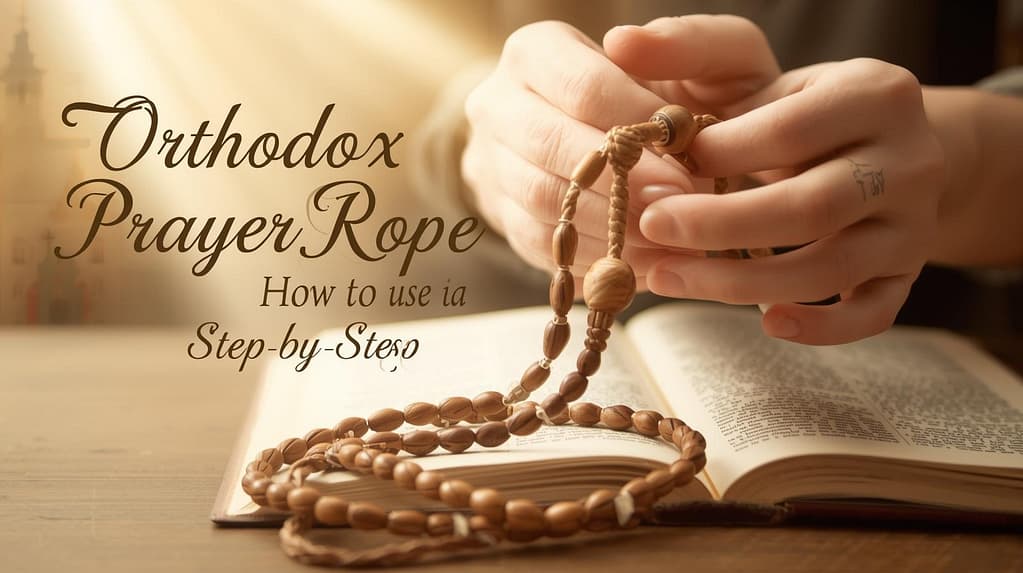
Holding the Rope Correctly for Focused Prayer
Many beginners ask orthodox prayer rope how to use or how to pray the orthodox rosary. The first step is holding the rope properly. Usually, you hold it in your right hand, letting the knots rest between your fingers. Each knot represents one prayer. The goal is not speed but attention.
I remember when I first started using a 33-knot rope. My fingers moved clumsily, and my mind wandered. Slowly, I realized the rope is a tool for training the heart, not just counting prayers. Every knot is an opportunity to return to God.
Reciting the Jesus Prayer Slowly and Thoughtfully
The central prayer is: “Lord Jesus Christ, Son of God, have mercy on me, a sinner.” This is the core of Orthodox devotion. People also search does the orthodox church have a rosary or can orthodox pray the rosary. Using a prayer rope, each knot represents one repetition of this simple prayer.
I have personally found that saying the Jesus Prayer slowly, knot by knot, helps my mind calm. Unlike the Catholic rosary that includes multiple prayers and meditations on scenes like the Wedding at Cana or the Flight into Egypt, the Orthodox prayer rope focuses on repetition and humility.
Moving Through Knots with Mindfulness
Many search prayer rope vs rosary or orthodox prayer rope vs rosary to understand the difference. When using a prayer rope, move your fingers slowly from knot to knot. Do not rush. Your attention should be on the words, not on finishing quickly.
I noticed that the more I focused on each knot, the more my mind entered quiet contemplation. Even during busy days, a 50-knot rope or 100-knot prayer rope became a sanctuary of peace.
Using the Cross on the Rope
If your rope has a cross at the end, bow or kiss it. This is common in monasteries and personal devotion. It is a sign of respect, not a rule. Many people search orthodox prayer rope bracelet, which sometimes has a small cross as well. I personally bow every time before starting. This simple act helps me center my heart before prayer.
Prayer Rope Knot Meanings (33, 50, 100, 300, 1000)
33-Knot Prayer Rope
The 33 knot prayer rope orthodox represents the 33 years of Christ’s life. Beginners often start with this rope because it is small and easy to carry. Using it daily helped me focus and gradually understand the depth of the Jesus Prayer.
Some people wonder how to make a 33 knot prayer rope. Traditionally, monks tie each knot while saying a prayer or blessing it. Even making your own rope can become a spiritual practice.
50-Knot Prayer Rope
The 50 knot prayer rope allows for longer prayer sessions. Many people use this at home. It is common for personal prayer time before breakfast or evening prayer. I started with a 50-knot rope and discovered that repeating prayers slowly changed my heart over weeks.
100-Knot Prayer Rope
The 100-knot prayer rope, also known as 100-knot wool prayer rope, is longer and used for more focused prayer. Some people search orthodox prayer rope 100 knots or orthodox wool prayer rope. This rope is often handmade in monasteries and is considered authentic.
I tried a 100-knot rope during Lent. It took more patience, but my prayer time felt richer. Each knot reminded me to stay present and humble.
300-Knot, 1000-Knot, and Other Long Ropes
For serious monks or retreatants, 300 knot prayer rope or 1000 knot prayer rope is used. These ropes take hours to complete, but they provide deep spiritual discipline. Many search orthodox monastery prayer rope, orthodox rosary prayer rope, or orthodox prayer rope 1000 knots to learn about these long ropes.
I once observed a monk using a 1000-knot rope. His fingers moved rhythmically, and his face was calm. Watching him, I understood why Orthodox prayer focuses on heart-centered repetition rather than imagination.
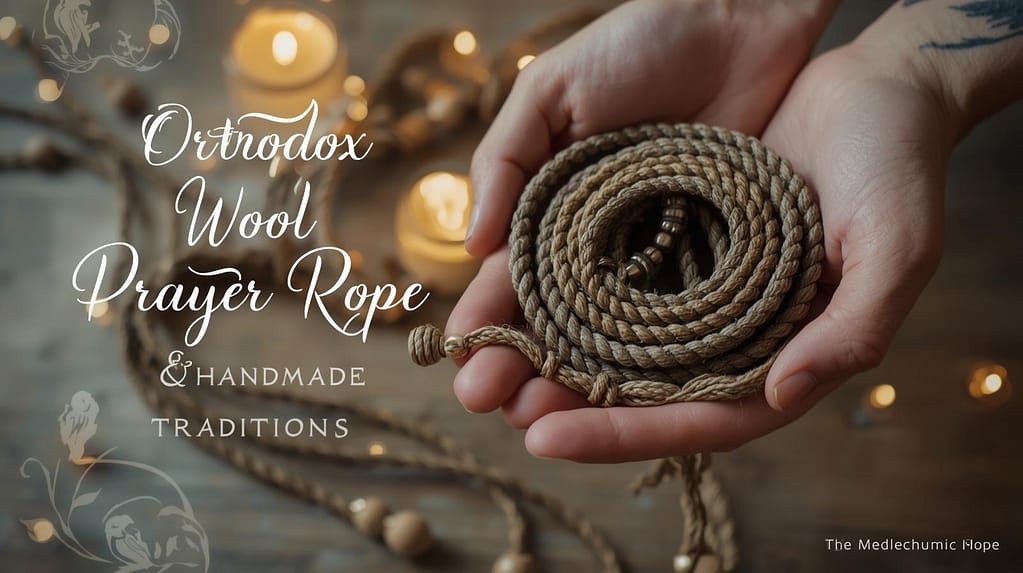
Orthodox Wool Prayer Rope & Handmade Traditions
Handmade and Authentic Ropes
Keywords like orthodox handmade prayer rope and authentic orthodox prayer rope are popular for beginners. Most wool prayer ropes are made in monasteries. The knots are tied by hand while saying prayers, which makes the rope spiritually significant.
I bought my first wool rope from a monastery. Holding it, I felt the blessing woven into each knot. It was soft, natural, and spiritually grounding. This experience showed me why handmade ropes are preferred over mass-produced versions.
Why Wool Matters
Search terms like orthodox wool prayer rope or 100 knot wool prayer rope emphasize the material. Wool is soft and durable. It represents simplicity and humility, qualities valued in Orthodox spirituality. Using a wool rope daily reminded me to keep my prayer humble and sincere.
Orthodox Prayer Rope Bracelet – Is It Appropriate?
What Is a Prayer Rope Bracelet?
A small version of the full rope, called a orthodox prayer rope bracelet, is convenient for daily reminders. Some people search this term to see if wearing it is allowed.
I wear mine while traveling. It reminds me to pray without needing to sit quietly. However, it cannot replace focused prayer with a full-length rope.
Using the Bracelet in Daily Life
The bracelet helps maintain awareness of God. I find that glancing at it during busy workdays brings my mind back to prayer. This is different from a rosary, which is mainly for structured prayer times. The bracelet is a modern adaptation of a traditional practice.
Where to Buy an Authentic Orthodox Prayer Rope
Monastery Sources
People search where to buy orthodox prayer rope, orthodox prayer rope monastery, and orthodox monastery prayer rope. Monastery ropes are handmade, blessed, and long-lasting. They are often sold directly or through monastery websites.
I purchased my first rope from a Greek monastery. It arrived wrapped with a small prayer card. This connection to the monastery made prayer feel personal and authentic.
Online Purchases
Some search orthodox prayer rope 100 knots or orthodox prayer rope bracelet online. While convenient, online ropes vary in quality. I once bought a cheap rope online. It frayed quickly and lacked spiritual significance. Now I prefer monastery-sourced ropes.
Do Orthodox Pray to Mary? Theotokos Explained
Marian Prayer in Orthodox Life
Search do orthodox pray to mary, do greek orthodox pray to mary, do eastern orthodox pray to mary. Orthodox Christians honor Mary as Theotokos. They do not worship her but ask for her prayers to God.
When I first lit a candle before Mary’s icon, I whispered, “Holy Mother, pray for us.” It felt like asking a trusted friend to join my prayer, not replacing prayer to Jesus.
Orthodox View of Marian Prayer
Many search orthodox view of Marian prayer. Mary is seen as the most holy human who bore God. Her intercessions are deeply respected. This is different from Catholic prayers that often meditate on scenes like the Presentation of the Theotokos or Queen of Heaven. Orthodox prayers are shorter, humble, and focused on asking Mary to pray with them.
Do Orthodox Pray to Saints, Angels, and Icons?
Saints as Intercessors
People often wonder if Orthodox Christians pray to saints or include Mary in their prayers. According to Orthodox teaching, saints live with God and can intercede for those on earth. Seeking their prayers is a common and cherished practice, offering believers spiritual support and guidance in their daily walk of faith.
I often pray to St. Seraphim or St. Nicholas. This does not replace prayer to Jesus but helps me focus and feel supported spiritually.
Angels and Protection
People also search do orthodox pray to angels. Orthodox Christians ask angels to guide and protect them. These prayers are always secondary to prayer directed to Jesus.
Icons as Windows to Heaven
Search do orthodox pray to icons. Icons are tools, not idols. Lighting a candle or bowing shows respect, not worship. I pray in front of an icon daily. It helps focus my attention and reminds me of the holy life of saints.
Do Orthodox Pray to Jesus Alone or With Intercession?
Centrality of Jesus
Search do orthodox pray to jesus. All Orthodox prayers ultimately go to Him. Saints, Mary, and angels only guide and intercede.
Experience Using the Prayer Rope
I repeat the Jesus Prayer many times on my rope. Even when I ask saints to pray for me, the focus always returns to Jesus. This repeated practice strengthens humility and helps develop a heart-centered prayer life.
Why Do Orthodox Pray for the Dead?
Theological Understanding
Search why do orthodox pray for the dead. Orthodox Christians believe prayers help the departed and unite the living and dead in God’s love.
Personal Reflection
I light candles for my grandparents and pray for their souls. It brings comfort and reminds me of eternal life. Prayer is simple, personal, and meaningful.
Orthodox Rosary vs Catholic Rosary – Real-Life Comparison
Structure Differences
Many search orthodox rosary vs catholic rosary or catholic vs orthodox rosary. The Catholic rosary has decades, Hail Marys, Our Fathers, and meditations on events like the Wedding at Cana or the Flight into Egypt. The Orthodox prayer rope, sometimes called orthodox rosary prayer rope, focuses on repeating the Jesus Prayer.
I once tried a Catholic rosary and followed each decade. It was beautiful, but my mind wandered. When I switched to an Orthodox rope, each knot grounded me in presence and stillness. The difference is subtle but profound.
Purpose and Intention
The Catholic rosary uses imagination to meditate on life events. Many search Orthodox contemplative prayer explained or Orthodox teaching on imagination in prayer. Orthodox prayer avoids imagination. The purpose is to calm the mind, focus the heart, and cultivate humility.
Using a 100-knot rope, I felt less distracted. The repeated Jesus Prayer brought peace. The rope trains the heart to stay in prayer, not just think about images or stories.
How to Make Your Own Prayer Rope
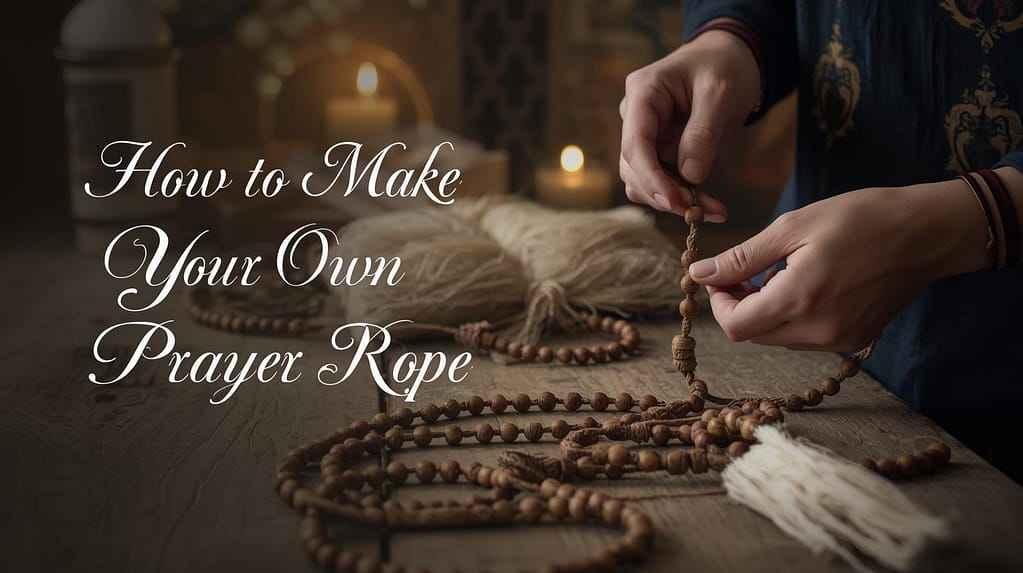
Making a 33-Knot Prayer Rope
Many search how to make a 33 knot prayer rope. Start with wool or cotton. Tie 33 knots while praying the Jesus Prayer. Each knot is a reminder to stay focused.
I tried making my own. It was slow, but tying each knot with prayer made my heart calmer. Handmade ropes carry personal intention, connecting the maker to God.
Making 50-Knot and 100-Knot Ropes
For 50 knot prayer rope or 100-knot prayer rope, the process is similar but longer. Each knot takes time and patience. Some monasteries bless ropes after they are made. This blessing adds spiritual depth.
I remember making a 100-knot rope. By the time I finished, I had prayed over 100 repetitions of the Jesus Prayer. It became a personal spiritual milestone.
Using Long Ropes (300, 1000 Knots)
Search 300 knot prayer rope or 1000 knot prayer rope. These are for advanced practitioners. Each knot takes time and attention. Monks use them for long retreats. I observed a monk using a 1000-knot rope—it was a disciplined, meditative practice that transformed focus and patience.
Orthodox Contemplative Prayer Explained
What Is Contemplative Prayer?
Many people search Orthodox contemplative prayer explained. In Orthodoxy, contemplative prayer is not emptying the mind or imagining scenes. It is repetition of a simple prayer, usually the Jesus Prayer, to bring the mind into the heart and foster inner peace.
When I first tried contemplative prayer with a 50-knot rope, my thoughts wandered. Gradually, repetition anchored my attention. The practice is gentle, not forceful, unlike some modern meditation techniques.
Is Meditation Allowed in Orthodoxy?
Search is meditation allowed in Orthodoxy. Yes, in a way. Meditation means focused attention on God. Orthodox prayer trains the mind and heart through repetition and presence, not visualization or imagination.
I realized that even in daily chores, I could repeat the Jesus Prayer silently. This extended contemplative practice made every moment a prayer.
Get Knowladge: Fear of Throwing Up: Meaning, Causes, Symptoms & Treatment
Can Orthodox Christians Pray the Rosary?
Understanding Church Guidance
Many search can Orthodox Christians pray the Rosary. The Church does not forbid it but does not officially use it. The rosary is foreign to Orthodox tradition. The Church encourages prayer with the Jesus Prayer and the prayer rope.
I tried a Catholic rosary during Lent. It was beautiful but not naturally suited to Orthodox life. Returning to my 33-knot rope felt more peaceful and spiritually aligned.
Integration With Orthodox Prayer Life
Some people ask does the Orthodox Church have a rosary. While the Church has no official rosary, some individuals use it privately. Many priests advise using Orthodox prayer tools like the 33 knot, 50 knot, or 100 knot ropes for daily devotion.
In my own life, integrating both traditions briefly helped me understand Catholic devotion. But my daily practice always returned to the prayer rope.
Where to Buy and Use Authentic Orthodox Prayer Ropes
Monastery and Online Sources
Search where to buy orthodox prayer rope or orthodox monastery prayer rope. Monasteries provide handmade, authentic ropes. Online stores sell them too, but quality varies.
I bought my first 50-knot rope from a monastery in Greece. It was soft, blessed, and durable. The experience of owning an authentic rope made daily prayer more meaningful.
Using Prayer Ropes in Daily Life
Search orthodox prayer rope how to use. The rope can be used while sitting, walking, or working. I often keep a small rope or bracelet at my desk. Even a few minutes of prayer during breaks brings focus and calm.
Real-Life Experiences With Prayer Ropes
Personal Transformation
Using ropes of different lengths taught me discipline. The 33-knot rope was simple and grounding. The 100-knot rope built patience. The 300-knot rope during retreat brought deep contemplative peace.
Dealing With Distractions
Many beginners struggle with wandering thoughts. I found that slowing down and focusing on each knot helped. The prayer rope is a guide, not a magic tool. The more consistent I was, the more I felt connected to God.
Community Practices
Search orthodox prayer rope monastery or orthodox monastery prayer rope. Monks, nuns, and laypeople use ropes together in some settings. Watching others pray silently with ropes inspired me. The shared tradition creates a strong spiritual environment.
Conclusion: The Heart of Orthodox Prayer
Embracing the Prayer Rope Instead of the Rosary
Search do orthodox pray the rosary or can orthodox pray the rosary. The Orthodox Church focuses on prayer ropes, not rosaries. The rope is simple, repetitive, and draws the heart to God.
Real-Life Insights
In my journey, using prayer ropes taught me humility, patience, and presence. Whether using a 33-knot, 100-knot, or even a bracelet, prayer becomes continuous and sincere. The experience surpasses the physical tool—the rope trains the heart.
Key Takeaways
The Orthodox prayer rope is more than a tool. It integrates prayer into daily life, honors saints and Mary without replacing Jesus, and cultivates a personal, contemplative spiritual life. Using authentic ropes from monasteries adds blessing and connection to centuries-old tradition.
Why do Orthodox people not pray the Rosary?
Orthodox Christians do not use the Rosary because it is a Catholic devotion with structured prayers like Hail Marys and meditations on the Mysteries. The Orthodox tradition emphasizes the Jesus Prayer repeated on a prayer rope, which focuses on continuous, heart-centered prayer rather than set meditations.
What is the Orthodox version of the Rosary?
The Orthodox equivalent is the prayer rope (komboskini or chotki). It is made of knots—commonly 33, 50, 100, or more—and used to repeatedly say the Jesus Prayer: “Lord Jesus Christ, Son of God, have mercy on me, a sinner.” Unlike the Catholic Rosary, it does not include Hail Marys or Mysteries.
Do Eastern Orthodox pray Hail Mary?
Yes, but rarely and differently from Catholics. Orthodox Christians may honor Mary (Theotokos) and ask for her prayers, but they do not recite the Hail Mary as a formal devotion like in Catholic practice. Marian prayer in Orthodoxy is shorter, focused on intercession, and always directed to God through her.
Do Eastern Orthodox use prayer beads?
Yes, they use prayer ropes, which function similarly to beads but consist of knots. These ropes (33, 50, 100, 300, or even 1000 knots) help maintain focus on the Jesus Prayer and aid in contemplative prayer.